

A teacher with 34 kids reading at nine different levels doesn’t need another app to explore — she needs three versions of Friday’s article ready before her coffee gets cold, and that single problem is the entire reason Diffit exists.
This Diffit AI review for teachers skips the marketing language and looks at what the tool does when you’re grading at 9pm with no time left to test-drive software. If you’re deciding whether to add Diffit to your toolkit, or whether to recommend it school-wide, here’s what matters: what it does, what it costs, where it earns its keep, and where it doesn’t.
What Diffit Actually Does (No Fluff Version)
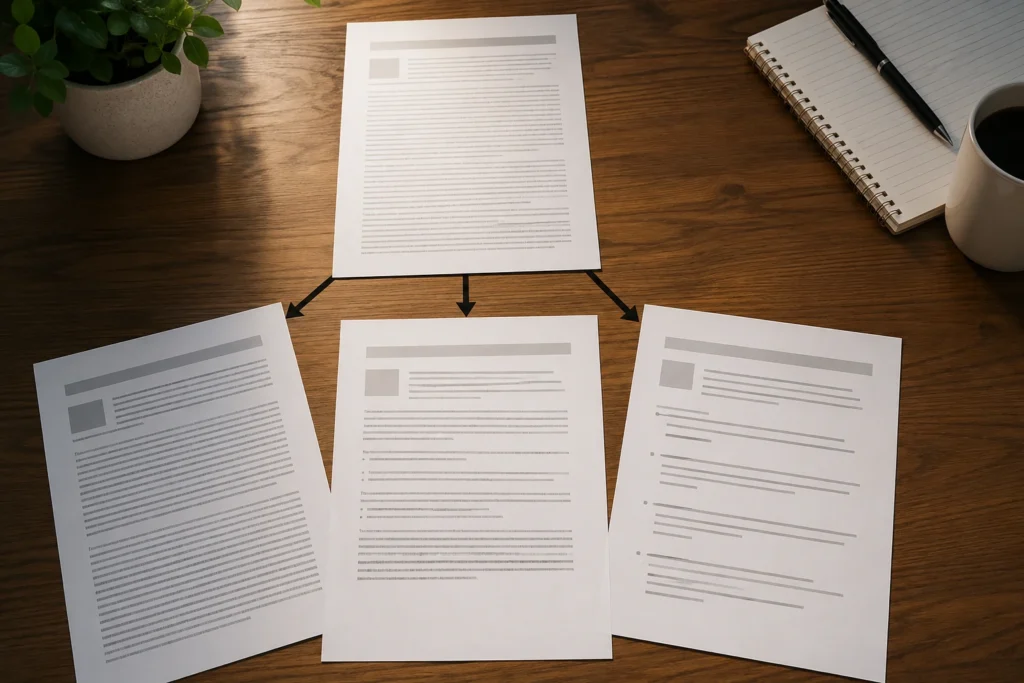
Diffit takes a piece of text — an article you paste in, a PDF you upload, a YouTube video, or just a topic you type — and turns it into classroom-ready material at multiple reading levels. Type “photosynthesis” or drop in a New York Times article on the 2026 midterms, and Diffit outputs a leveled passage, comprehension questions, vocabulary support, and often a summary, all adjustable roughly from second grade through high school.
That’s the core loop, and it’s the reason most teachers open Diffit in the first place: differentiation without three separate hours of manual rewriting. Every teacher preparation program talks about meeting students where they are. Almost none of those programs explain how to do that for 30 students across a 45-minute prep period. Diffit closes that gap by generating the differentiated versions instead of asking you to write them by hand.
Beyond the original text-leveling feature, the 2026 version of the platform has expanded further than most teachers expect. The catalogue now includes lesson kits, station-rotation packs, decodable phonics readers, science labs, choice boards, substitute lesson plans, and unit tests. The core strength is still text adaptation, and that’s still what most classrooms use it for daily, but the tool has stopped being a one-trick app.
One feature worth calling out on its own: multilingual translation that keeps instructional scaffolds intact across languages, not just a straight Google Translate pass. For teachers with multilingual learners, that’s frequently the single feature that justifies opening the app at all — a student can read the leveled English passage next to a native-language version without losing the comprehension supports built into the English text.
The Real Cost: Pricing, Time, and What You Get at Each Tier

Here’s where a lot of “Diffit AI review for teachers” content gets vague, so let’s be specific.
The Basic plan is free, with no credit card required, and it’s genuinely usable — not a crippled trial. On the free tier you can generate adapted passages, comprehension questions, and vocabulary support from any text, article, or video link, at multiple reading levels, and export to PDF. For an individual teacher who wants to differentiate two or three times a week, the free plan covers that use case without friction.
The Individual Pro plan runs $14.99/month or $149.99/year. Paying unlocks unlimited generations, export directly to Google Docs and Slides, the full activity library (lesson kits, station rotations, and the rest), and one feature that changes daily workflow more than any other: one-click export to Google Classroom. If your school runs on Google Classroom, that single export function is often worth the subscription on its own, because it removes the copy-paste step between “material generated” and “material assigned.”
Diffit for Schools is priced as a custom annual rate based on student enrollment, quoted directly rather than published as a flat number. That’s a legitimate friction point if you’re an administrator trying to compare three tools on a spreadsheet before a budget meeting — you’ll need to request a quote rather than pull a number off the pricing page.
On time saved, teachers using the tool consistently report a range of two to five hours per week, depending on how much differentiation their normal workflow already required. A teacher who used to build three versions of every reading passage by hand — the accommodated version, the on-level version, and the extension version — is the profile that sees the high end of that range. A teacher who only occasionally modifies texts will see less, because there’s less manual work to replace in the first place.
The ROI math for a department chair or curriculum director is straightforward: multiply the hourly rate of your teaching staff by the hours saved per week, per teacher, and compare that to $149.99 a year for an individual license or the quoted district rate. For most schools, the free tier alone already pays for itself in reclaimed prep time, and the paid tier is a rounding error next to a single teacher’s weekly planning hours.
Run the numbers on a mid-size department to see why this matters at scale. A six-teacher social studies department, each spending three hours a week hand-building differentiated versions of primary sources and reading passages, is burning roughly 18 staff-hours weekly on work Diffit can compress to a fraction of that time.
At even a conservative $35 hourly rate for prep-period work, that’s over $600 a week in staff time going toward manual differentiation that a $149.99-a-year license per teacher — under $900 total for the department — could largely absorb. The free tier alone might cover half that department’s needs before anyone signs a purchase order. That’s the kind of comparison worth putting in front of a principal, because it’s not a soft “this tool feels helpful” pitch — it’s a direct swap of paid staff hours for a subscription line item.
Compare that against what happens without a tool like this in place. Differentiation either doesn’t happen consistently, because there isn’t time, or it happens unevenly across a department, with some teachers building out full leveled sets and others handing every student the same text regardless of reading level. Neither outcome is a knock on the teachers — it’s a predictable result of asking people to do work that used to take real time and calling it “best practice” without giving them a faster way to do it. Diffit doesn’t remove the judgment call of whether a passage fits the lesson; it removes the hour of retyping and reformatting between having that judgment and having usable material.
Real Classroom Examples: Where Diffit Earns Its Spot

Generic praise doesn’t help you decide whether to use this. Specific scenarios do.
The mixed-ability ELA class. A ninth-grade English teacher assigns a news article on a current event. Instead of handing every student the same 1200-word piece written at an 11th-grade reading level, she pastes the article into Diffit and generates versions at three reading levels in under two minutes. Students with IEPs get a version with simplified sentence structure and built-in vocabulary support; on-level students get the standard adaptation; advanced students get an extension version with added analytical questions. The lesson objective stays identical across all three versions — only the access point changes.
The ELL-heavy science class. A middle school science teacher covering ecosystems has six students who are still building English proficiency. She generates the standard leveled passage in English, then pulls the translated version with scaffolds intact, so those six students can cross-reference their home language while working through the same content as their classmates. Nobody gets a “simplified” packet that signals they’re doing different, lesser work — everyone is working from Diffit-generated material, so the differentiation is invisible to the room.
Related Post: AI Rubric Generator for Teachers Free
The Friday sub plan. A teacher wakes up sick on a Thursday night and needs a substitute lesson plan by 6am. Instead of scrambling, she generates a ready-to-use lesson kit from the current unit topic, exports it, and has a complete plan with reading material and questions built in before she goes back to sleep. This isn’t the flagship use case Diffit is known for, but it’s the kind of edge-case reliability that turns a nice-to-have tool into one you actually keep paying for.
The department-wide adoption. A high school social studies department standardizes on Diffit for primary source analysis. Instead of every teacher individually rewriting historical documents for reading level, the department builds a shared bank of leveled primary sources once, using Diffit, and reuses it across sections and school years. The time investment happens once; the payoff compounds every semester after.
In each case, the pattern is the same: Diffit removes the manual labor of rewriting content at multiple levels, and hands that labor to software that does it in under a minute instead of the 30-45 minutes it typically takes a teacher to do by hand for a single passage.
The Honest Limitations (Because Every Review Skips These)

No credible Diffit AI review for teachers should end without the catches, so here they are.
AI output needs a human check, every time. Generated passages and comprehension questions are not classroom-ready on arrival. Accuracy and lesson alignment still require a teacher’s review before the material goes in front of students. This isn’t a Diffit-specific weakness — it’s true of every generative AI tool in education — but it means the time savings estimate above already assumes you’re reviewing output, not skipping that step.
It’s a narrow tool, not a full platform. Diffit does text leveling and differentiation extremely well, and that focus is exactly why it works better at that one job than broader competitors. But if you need lesson planning, rubric generation, parent communication, or report card comments, you’ll be reaching for a second tool. Competitors like SchoolGPT and MagicSchool AI bundle a wider range of teacher workflows — lesson plans, rubrics, family emails, quizzes — into one subscription, often at a comparable or lower annual price than Diffit Pro. If you want one login for everything, Diffit isn’t that login.
District pricing lacks transparency. The custom-quote model for Diffit for Schools makes sense from a sales perspective, but it slows down procurement. If you’re an administrator who needs a number before you can even schedule a demo, budget extra time for that back-and-forth compared to competitors who publish a flat per-seat district rate.
Grade-level ceiling. Diffit’s leveled output tops out around high school. If you’re teaching community college, adult education, or advanced AP-level differentiation beyond what a typical high schooler needs, you’ll hit the edges of what the tool is built for faster than a K-8 teacher will.
There’s also a real trade-off worth naming directly: MagicSchool AI bundles a differentiation assistant into a much broader platform at a lower overall price, so if budget is the deciding factor and you need a dozen different teacher tools under one login, MagicSchool is the stronger value play. But bundled tools tend to do many things at a “good enough” level, and Diffit’s differentiation output is noticeably more polished because differentiation is the entire product, not one feature among fifty. For a teacher whose biggest daily pain point is genuinely reading-level differentiation, that focus wins the comparison even at a higher per-feature price.
Weighed against those limitations, the honest verdict from teachers who’ve used it for a semester or longer still lands positive: Diffit does one job — reading-level differentiation — better than any generalist tool attempting the same feature as a side offering, and the free tier removes the risk of finding that out for yourself.
Diffit won’t plan your unit, grade your essays, or email a parent for you, and it was never trying to. It will hand you three leveled versions of tomorrow’s reading in under two minutes, and for most teachers buried in prep work, that trade is worth taking.
What is Diffit AI and what does it do?
Diffit AI is an educational tool that helps teachers create differentiated classroom materials from text, PDFs, YouTube videos, or topics. It can generate leveled passages, comprehension questions, vocabulary support, summaries, and other classroom resources.
Is Diffit AI free for teachers?
Yes. Diffit offers a free Basic plan with no credit card required. It allows teachers to generate adapted passages, comprehension questions, and vocabulary support at multiple reading levels and export materials to PDF.
How much does Diffit Pro cost?
The Individual Pro plan costs $14.99 per month or $149.99 per year. It includes unlimited generations, Google Docs and Slides exports, the full activity library, and one-click export to Google Classroom.
How much time can teachers save with Diffit?
Teachers using Diffit consistently report saving around two to five hours per week, depending on how much differentiation they normally do manually. Teachers who regularly create multiple versions of reading materials may see the greatest time savings.
Does Diffit AI replace a teacher’s judgment?
No. Teachers still need to review AI-generated passages and questions for accuracy and lesson alignment before giving them to students. Diffit reduces the manual work involved in differentiation but does not replace the teacher’s professional judgment.
Resources
