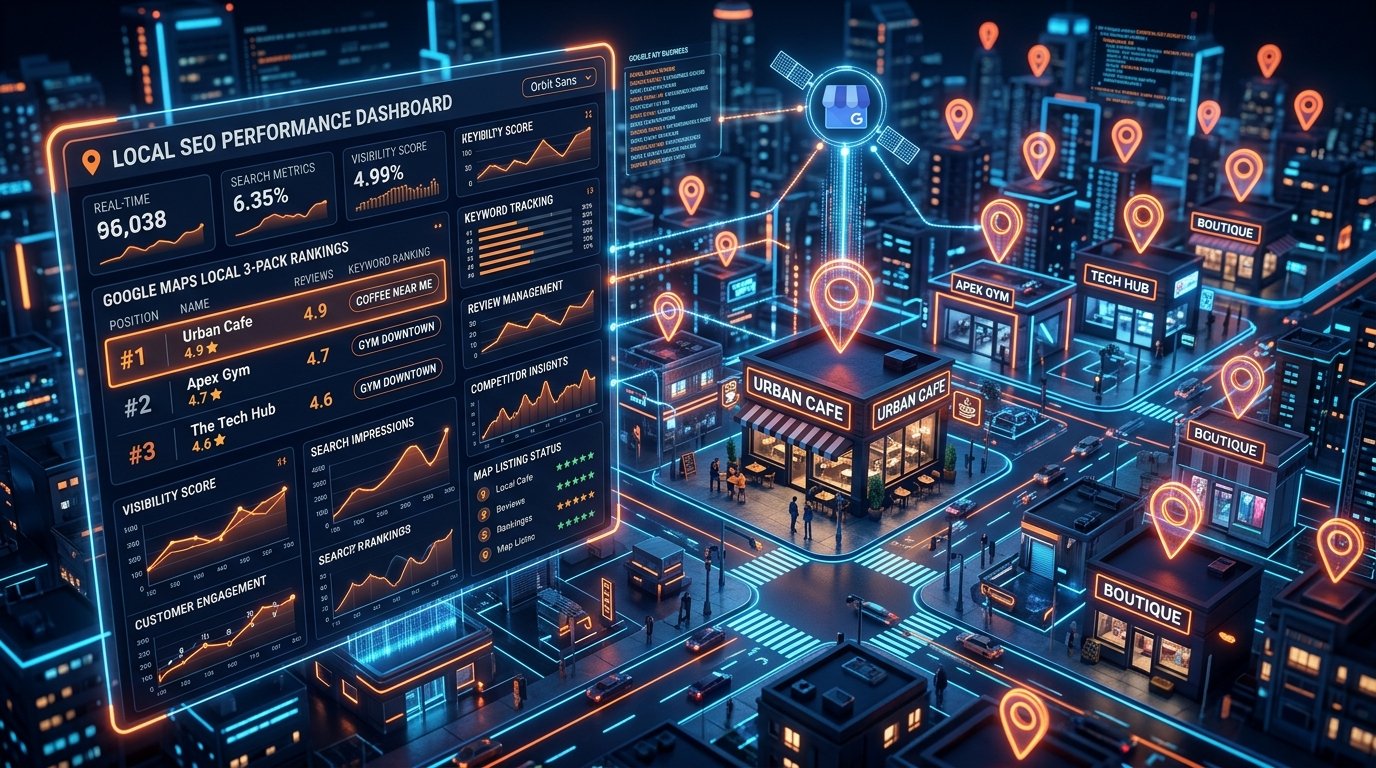
If your small business isn't ranking in the Google Maps Local 3-Pack when nearby customers search for your services, you are actively giving away qualified buyers to your competitors. In 2026, over 46% of all Google searches carry local intent, and an astounding 76% of people who search on their smartphone for something nearby visit a business within 24 hours.
Local SEO isn't an optional tactic — it is the fundamental customer acquisition engine for retail stores, professional clinics, law practices, home service contractors, cafes, and B2B local service providers. This comprehensive playbook walks you through every single step to conquer local search results and build predictable foot traffic and phone calls.
1. Why Local SEO Delivers the Highest ROI for Small Businesses
Unlike traditional search engine optimization where you compete against massive national conglomerates and aggregator directories (like Yelp or Justdial), local SEO levels the playing field. When Google detects geographic intent (e.g., "plumber near me" or "digital marketing consultant in Delhi"), its algorithm prioritizes proximity, relevance, and prominence above raw domain authority.
Here is why local SEO is unmatched for small business growth:
- Zero Cost Per Click: Unlike Google Ads where local keywords often cost ₹150 to ₹800 per click, organic map rankings drive continuous phone calls and walk-ins completely free.
- Unmatched Buyer Intent: A consumer searching for "emergency dental clinic near me" isn't looking for educational articles — they have their wallet out and need immediate service.
- Dominant Mobile Visibility: On smartphones, Google Maps and the Local 3-Pack take up over 80% of the above-the-fold screen space, pushing regular organic blue links far down the page.
2. Claiming & Optimizing Your Google Business Profile (GBP)
Your Google Business Profile (formerly Google My Business) is the absolute epicenter of your local search presence. A fully optimized profile signals authority to Google's ranking algorithm and immediately builds trust with prospective buyers.
Step-by-Step GBP Optimization Checklist
- Exact Match Business Name: Use your official real-world legal business name. Avoid stuffing unnecessary keywords into your title, as Google's spam filters aggressively penalize unnatural keyword stuffing.
- Primary Category Selection: Choose the most specific primary category available (e.g., "Marketing Agency" rather than just "Consultant"). Your primary category exerts more algorithmic weight than all secondary categories combined.
- Complete Every Single Data Field: Fill out opening hours, special holiday hours, business description (up to 750 characters including natural localized keywords), service areas, attributes, and appointment URLs.
- High-Resolution Geotagged Photos: Businesses with over 100 high-quality photos receive 520% more calls and 1,065% more website clicks than average listings. Upload interior photos, storefront images, team photos, and customer project snapshots every single week.
- Activate Messaging & Direct Quotes: Enable Google's direct messaging feature so mobile searchers can message your team instantly with queries.
3. Hyperlocal Keyword Research: Finding What Nearby Buyers Search For
Effective local keyword research uncovers the exact vernacular and geographic modifiers your target clientele types into search engines. You must target two distinct keyword structures:
| Keyword Archetype |
Search Format Example |
Search Intent |
| Explicit Local Keywords |
"SEO services in Noida Sector 62" |
High intent, specific geographic location |
| Implicit "Near Me" Keywords |
"website design agency near me" |
Immediate need, relies on mobile GPS proximity |
| Service + Problem Keywords |
"affordable small business marketing consultant" |
Commercial investigation and comparison |
Use tools like Google Search Console, Google Trends, and Google's autocomplete drop-down to uncover neighborhood-level search terms, landmark references, and regional slang that broad national keyword tools frequently overlook.
4. On-Page Local SEO: Crafting High-Converting Geo-Targeted Pages
Your website must reinforce your geographic relevance. Google crawls your website pages to verify whether the business address and service offerings match the claims made on your Google Maps listing.
Crucial On-Page Elements to Optimize
- Localized Title Tags & Meta Descriptions: Structure your homepage title as
[Primary Service] in [City/Neighborhood] | [Business Name] (e.g., "Digital Marketing & SEO Expert in Delhi NCR | SagarAIhub").
- Header Hierarchy with Geo-Modifiers: Incorporate natural city, state, and neighborhood references into your H1, H2, and H3 tags.
- Dedicated Location Landing Pages: If you serve multiple towns or regional districts, create unique, high-value landing pages for each service area. Never duplicate identical content — customize each page with specific regional case studies, client reviews, local team bios, and Google Maps embeds.
- Embedded Google Map: Embed your verified Google Map iframe on your Contact and About pages to anchor your digital entity to your physical coordinate.
5. NAP Consistency & Local Citations: Building Unbreakable Trust
NAP stands for Name, Address, and Phone Number. Search engines verify your business legitimacy by cross-referencing your NAP data across hundreds of third-party business directories, social platforms, and chamber of commerce records.
Inconsistent NAP information — such as an old phone number on Justdial, a misspelled street name on Facebook, or conflicting business names on IndiaMART — creates algorithmic confusion that suppresses your rankings. Conduct a full citation audit and ensure your details are 100% identical character-for-character across:
- Major Search Engines: Google, Apple Maps, Bing Places
- Tier-1 Business Directories: YellowPages, Justdial, Sulekha, IndiaMART, TradeIndia
- Social Media Profiles: Facebook Business Page, LinkedIn Company Page, Instagram for Business, YouTube
- Hyperlocal Directories: Local chamber of commerce sites, regional business associations, and industry trade registries
6. The Review Engine: How to Collect, Manage, and Rank with 5-Star Feedback
Customer reviews are the second most influential ranking factor for Google Maps rankings, and the single most critical factor in customer conversion. In fact, 88% of consumers consult online reviews before trusting a local small business.
How to Build an Ethical Review Pipeline
- Shorten the Friction: Generate a short Google Review direct URL from your GBP dashboard (e.g.,
https://g.page/r/[your-code]/review) and create a branded QR code for invoices, business cards, and reception counters.
- Automated Post-Purchase Triggers: Send a personalized SMS or WhatsApp message 24 to 48 hours after successfully completing a project or service, asking for genuine feedback.
- Prompt Specific Keywords in Reviews: Encourage clients to mention the specific service they received and their neighborhood (e.g., "Could you mention which service we helped you with in your review?"). Google scans review text for keyword signals!
- Respond to Every Single Review: Reply to 100% of reviews — both positive and negative. Thank satisfied customers, and respond professionally and constructively to critical feedback within 24 hours.
7. Local Business Schema: Speaking Directly to Search Engines
Schema markup (JSON-LD structured data) provides search engine crawlers with an unambiguous, machine-readable declaration of your business identity, physical address, geographic coordinates (latitude and longitude), price range, operating hours, and customer ratings.
Implementing LocalBusiness or ProfessionalService schema markup directly into your website's <head> guarantees that search bots properly index your entity and awards you rich snippet enhancements in search results.
8. Your 30-Day Local SEO Quick-Start Checklist
- Claim, verify, and fill out 100% of your Google Business Profile.
- Add at least 25 high-resolution photos of your storefront, team, and projects.
- Conduct an audit of your NAP citations and standardize formatting everywhere.
- Implement
LocalBusiness JSON-LD schema on your website homepage.
- Create a dedicated, intent-rich service page for your core regional offerings.
- Reach out to your past 15 satisfied clients and request honest Google reviews.
- Publish weekly Google Business Profile updates highlighting special offers, recent case studies, or business news.
Conclusion: Start Dominating Your Local Market Today
Local SEO is not an overnight trick; it is a compounding digital asset. Businesses that invest in systematic profile optimization, robust customer review pipelines, and clean technical architecture establish an enduring moat that competitors cannot easily overcome.
Ready to turn your local presence into an automated customer acquisition machine? Book a free growth consultation with Sagar Chauhan today, and let's craft an aggressive local search blueprint customized for your business goals.
Free Implementation Call
Book a free 30-minute strategy session with Sagar Chauhan. Get an actionable roadmap tailored specifically to your website and industry.